

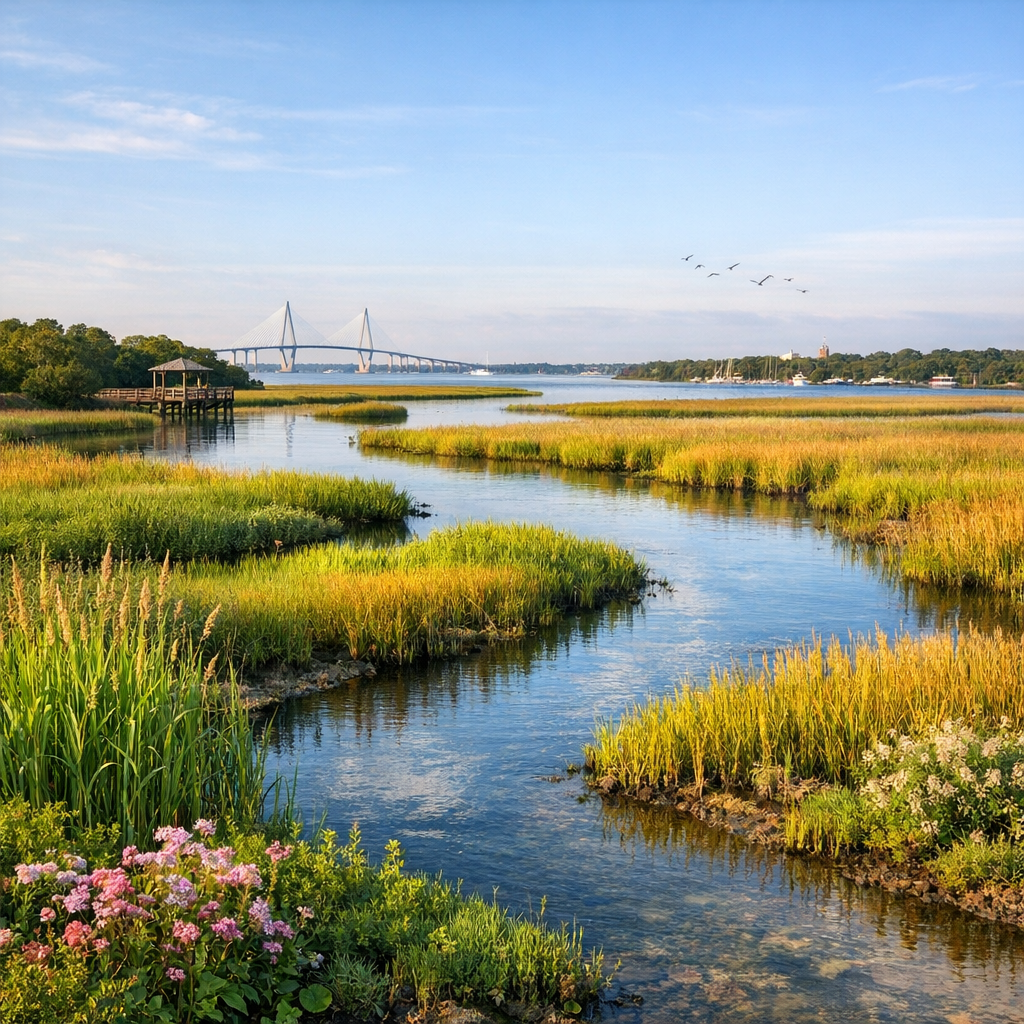
North Charleston, South Carolina, experiences a humid subtropical climate characterized by hot, humid summers and mild winters. This climate influences various aspects of daily life, from energy consumption to outdoor activities.
Climate Overview
Throughout the year, temperatures in North Charleston typically range from lows around 42°F (6°C) in winter to highs near 90°F (32°C) in summer. The city receives an average annual precipitation of approximately 54 inches (1378.7 mm), with the wettest months being July and August. Snowfall is rare, with only trace amounts observed in December.
Environmental Initiatives
Recognizing the importance of sustainability, North Charleston has implemented several environmental initiatives:
Composting Programs
To reduce food waste, the city has established compost drop-off sites, including locations at Northwoods Park and Mosstree Park near Park Circle. These sites have collectively diverted over 10 tons of food scraps from landfills, contributing to a region-wide effort that diverted nearly 210 tons of food waste last year.
Marsh Restoration
The South Carolina Ports Authority completed the King’s Grant Marsh Restoration in May 2023. This project aims to improve water quality and restore saltwater marshes, supporting marine ecosystems. Plans are underway to develop the area into a public park with access to the Ashley River.
Community Partnerships
Organizations like the Lowcountry Alliance for Model Communities (LAMC) collaborate with local residents to address environmental justice issues. LAMC focuses on affordable housing, economic development, education, and environmental justice, empowering residents to improve their quality of life.
Understanding North Charleston’s climate and supporting local environmental initiatives are essential steps toward fostering a sustainable and resilient community.