

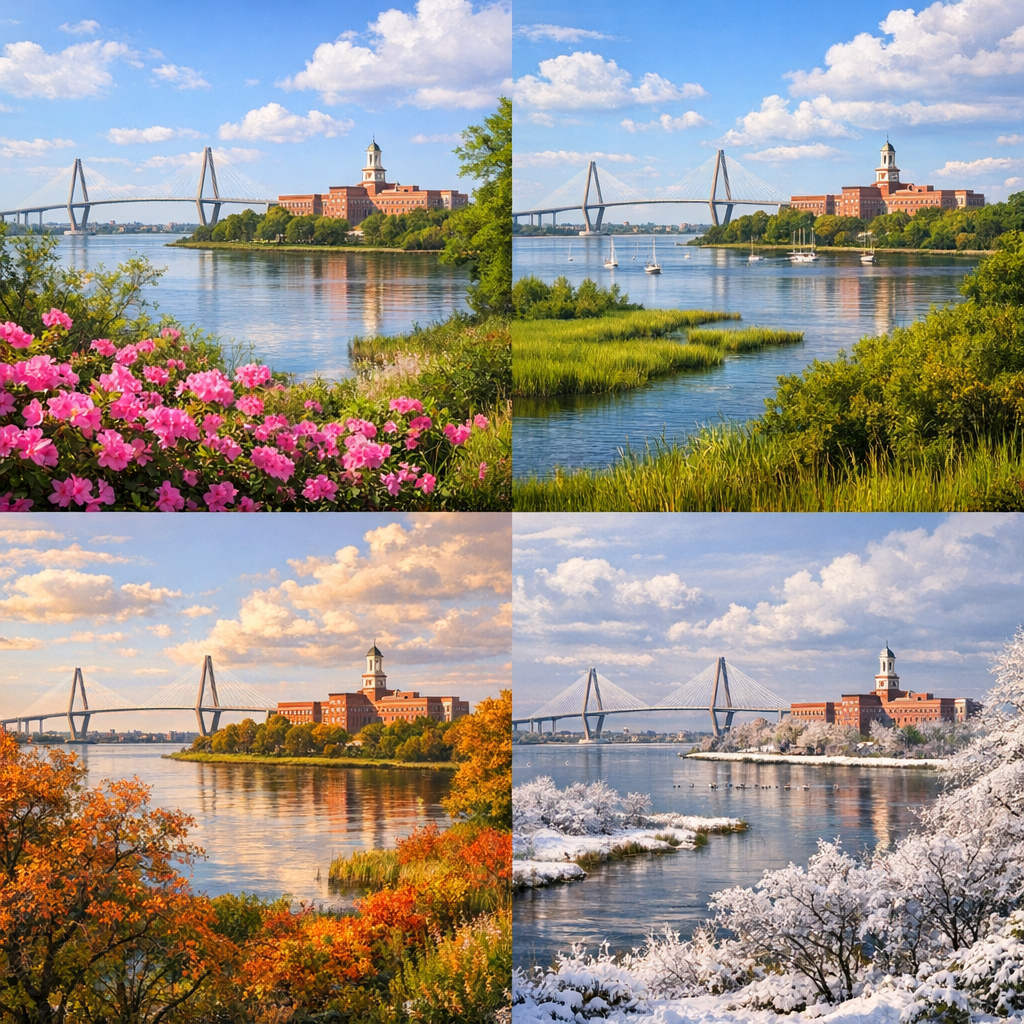
North Charleston, South Carolina, experiences a humid subtropical climate characterized by hot, humid summers and mild winters. Understanding these patterns can help residents and visitors plan accordingly.
Spring: March to May
Spring brings a gradual warming trend. Average temperatures rise from 56.8°F (13.8°C) in March to 80.8°F (27.1°C) by May. Daylight increases from 12 hours in March to nearly 14 hours in May, providing ample time for outdoor activities. Rainfall is moderate, with April typically being the wettest spring month, averaging 1.65 inches (42 mm) of precipitation.
Summer: June to August
Summers are hot and humid. Average high temperatures range from 87.1°F (30.6°C) in June to 89.6°F (32°C) in July. These months also see increased rainfall, with August receiving up to 4.29 inches (109 mm). Despite the heat, longer daylight hours, peaking at 14.3 hours in June, allow for extended outdoor activities.
Autumn: September to November
Autumn offers a respite from the summer heat. Temperatures decrease from an average high of 84.4°F (29.1°C) in September to 65.8°F (18.8°C) in November. Rainfall diminishes, with November averaging 1.02 inches (26 mm). Daylight hours also shorten, from 12.4 hours in September to 10.5 hours in November.
Winter: December to February
Winters are mild compared to many other regions. Average high temperatures range from 60.4°F (15.8°C) in December to 42.8°F (6°C) in January, the coldest month. Rainfall is lower, with January receiving about 0.67 inches (17 mm). Snowfall is rare, making winter a comfortable season for those averse to cold weather.
By understanding these seasonal patterns, residents and visitors can make informed decisions about activities and attire throughout the year.