

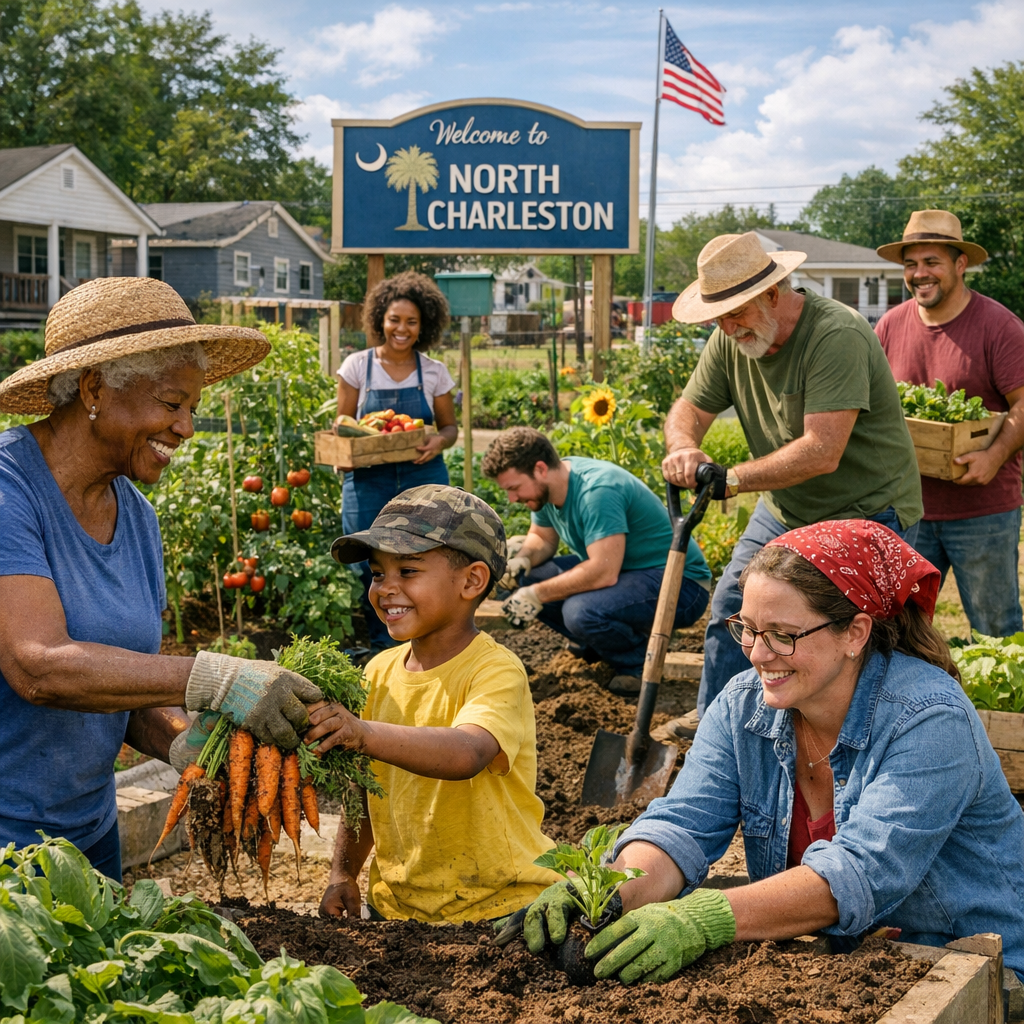
Residents of North Charleston have long faced challenges associated with food deserts—areas lacking access to affordable, nutritious food. The closure of the Winn-Dixie in 2005 left many neighborhoods without a major grocery store, compelling residents to rely on local food drives and grassroots organizations for sustenance.
Community initiatives have emerged to address this pressing issue. For instance, Fresh Future Farm has been instrumental in providing fresh produce to the community. However, these efforts, while commendable, are not sufficient to meet the needs of all residents. Many still have to travel significant distances to access full-service grocery stores, a daunting task for those without reliable transportation.
The city has attempted to attract major grocery retailers by offering incentives, including land and financial support. Despite these efforts, retailers have been hesitant to establish stores in the area, often citing economic metrics that do not align with their business models. This reluctance has led to frustration among residents, who feel that their communities are being overlooked and underserved.
Historical factors have also played a role in the current situation. The construction of Interstate 26 in the 1960s displaced many Black families and disrupted established neighborhoods. Today, residents express concerns that ongoing infrastructure projects and gentrification may further marginalize existing communities, making it even more challenging to attract essential services like grocery stores.
Community leaders and organizations continue to advocate for solutions. The Lowcountry Alliance for Model Communities (LAMC), for example, works to address issues such as affordable housing, economic development, education, and environmental justice. Their efforts aim to empower residents and promote a sense of ownership within the community.
While grassroots initiatives provide some relief, the need for systemic change remains. Residents are calling for more substantial investment in their neighborhoods, including the establishment of grocery stores that offer fresh, affordable food. They emphasize the importance of community involvement in planning and development processes to ensure that the needs of current residents are prioritized.
As North Charleston continues to grow and evolve, addressing the issue of food deserts is crucial for the health and well-being of its residents. Collaborative efforts between the community, city officials, and potential business partners are essential to create sustainable solutions that benefit all members of the community.